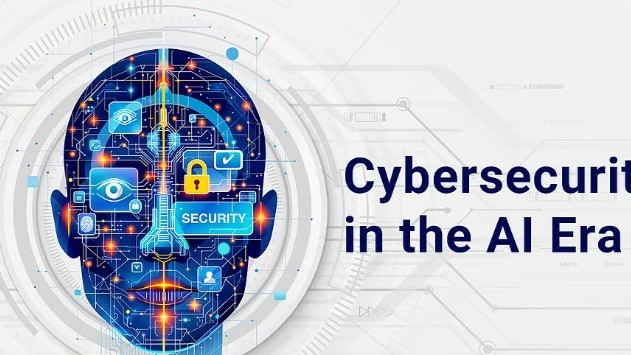
AI cybersecurity news today is attracting attention as artificial intelligence becomes an increasingly important part of digital security. AI technologies are helping security professionals identify suspicious activity, detect vulnerabilities, analyze threats, and respond to cyber incidents. At the same time, cybercriminals are exploring ways to use AI to improve phishing campaigns, automate attacks, and exploit security weaknesses.
On November 3, 2026, several important developments highlighted the growing connection between artificial intelligence and cybersecurity. The UK’s National Cyber Security Centre (NCSC) issued a warning about the potential use of AI-powered malware against critical infrastructure by 2028. Taiwan also announced a task force to address emerging AI-related cyber threats. Meanwhile, cybersecurity companies are investing in technologies designed to monitor and secure AI systems.
These developments demonstrate that AI is becoming both a powerful cybersecurity defence tool and a potential source of new digital risks.
This article explores the latest AI cybersecurity news, major developments, emerging threats, industry trends, and practical security recommendations.
Latest AI Cybersecurity News Today – November 3, 2026
Artificial intelligence and cybersecurity are evolving rapidly. Today’s developments show that governments and technology companies are paying greater attention to the risks associated with AI-powered attacks and the security of autonomous AI systems.
Here are some of the major developments reported today.
| News Development | Organization or Country | Key Information |
|---|---|---|
| AI-powered cyberattack warning | UK NCSC | Warned about likely AI-powered malware use against critical infrastructure by 2028 |
| AI cybersecurity task force | Taiwan | Established a task force to address advanced AI-related cyber threats |
| AI security acquisitions | CrowdStrike | Announced acquisitions involving AI security monitoring and testing technologies |
| Security research initiative | OpenAI | Reported a security initiative involving external researchers and vulnerability testing |
| AI and critical infrastructure | United Kingdom | Called for stronger cyber resilience and improved protection of essential services |
These developments highlight the need for stronger cybersecurity strategies as AI adoption increases. <Cite refs={[“turn663261news12″,”turn663261news17″,”turn663261news22″,”turn663261news14”]} />
1. UK NCSC Warns About AI-Powered Cyberattacks by 2028
One of the most significant AI cybersecurity developments on November 3, 2026, came from the United Kingdom’s National Cyber Security Centre.
The NCSC warned that AI-powered malware is highly likely to be used in a ransomware attack against the UK’s critical national infrastructure before the end of 2028.
Critical national infrastructure includes services and facilities that are essential to society and the economy. These include electricity networks, water systems, healthcare, transportation, communications, and industrial operations.
The warning appears in the NCSC’s State of the Cyber Nation report. The agency highlighted concerns that artificial intelligence could help attackers discover and exploit existing security weaknesses more quickly.
The report also emphasizes the danger of organizations continuing to depend on outdated technology and insufficient security practices.
Why this news matters
AI can make certain stages of cyberattacks faster and more efficient. Attackers may use AI to support reconnaissance, identify exposed systems, develop convincing phishing messages, and automate parts of malicious operations.
The warning does not mean that an AI-powered attack on UK critical infrastructure has already happened or that an attack by 2028 is guaranteed. It is a forward-looking security assessment that organizations should take seriously.
The NCSC is encouraging businesses to improve security investment, address known vulnerabilities, and strengthen their ability to recover from cyber incidents. <Cite refs={[“turn663261news12″,”turn663261news21”]} />
2. Taiwan Establishes a Task Force to Address AI Cyber Threats
Another important development reported on November 3, 2026, concerns Taiwan’s response to emerging artificial intelligence security challenges.
Taiwan’s Ministry of Digital Affairs established a task force to address cybersecurity risks associated with advanced AI. The initiative is intended to improve coordination between government agencies and operators of critical infrastructure.
The announcement reflects growing concern that increasingly capable AI systems could make cyberattacks faster and more difficult to detect or prevent.
As organizations introduce AI into business operations, government services, and digital infrastructure, protecting these systems becomes increasingly important.
What the task force means
The initiative highlights several important priorities:
- Improving coordination between government agencies.
- Strengthening the cybersecurity of critical infrastructure.
- Understanding threats involving advanced AI technologies.
- Improving readiness for AI-assisted cyberattacks.
- Supporting cooperation between public institutions and infrastructure operators.
This development demonstrates that AI cybersecurity is not only a concern for technology companies. Governments also need strategies to protect essential digital services. <Cite refs={[“turn663261news17”]} />
3. CrowdStrike Invests in AI Security Technologies
Cybersecurity companies are also responding to the growing use of artificial intelligence in business environments.
A development reported on November 3, 2026, involved CrowdStrike’s planned acquisition of two AI security startups, Fiddler AI and Dreadnode, for a combined reported value of $495 million.
The technologies address different parts of AI security.
Fiddler focuses on monitoring and explaining AI systems’ behaviour after deployment. Dreadnode focuses on testing AI models and agents for vulnerabilities before they are launched.
The development reflects a growing need to monitor AI systems that can interact with applications, access business information, and perform tasks through connected tools.
Why AI security monitoring matters
Businesses increasingly use AI agents to support customer service, research, data processing, software development, and internal operations.
However, an AI agent with excessive permissions or poor configuration could create security problems.
Organizations need to understand:
- Which applications an AI agent can access.
- What information it can retrieve or modify.
- Which actions it is authorized to perform.
- Whether its decisions and tool interactions can be monitored.
- How abnormal behaviour can be detected and stopped.
AI security monitoring can help organizations maintain better visibility and control over automated systems. <Cite refs={[“turn663261news22”]} />
4. OpenAI Reports a New Security Research Initiative
Another reported development on November 3, 2026, concerns an OpenAI security initiative involving external researchers and internal security teams.
The reported initiative includes collaboration with Cathedral Systems and increased bug bounty rewards to encourage researchers to identify and report serious security vulnerabilities.
Security research programmes are important because identifying weaknesses before malicious attackers exploit them can help organizations improve their systems.
AI technologies may also assist researchers in reviewing code, discovering vulnerabilities, and testing possible fixes.
The broader lesson is that AI development and cybersecurity research increasingly need to work together. Secure AI systems require ongoing testing, responsible vulnerability disclosure, and continuous improvements. <Cite refs={[“turn663261news14”]} />
What Is AI Cybersecurity?
AI cybersecurity refers to the use of artificial intelligence and machine learning technologies to protect computer systems, networks, applications, and digital information from cyber threats.
Traditional cybersecurity tools often depend on predefined rules, known threat signatures, and manually configured security controls. AI-based technologies can analyze large amounts of data and identify patterns that may indicate suspicious activity.
For example, an AI-powered security system may examine login activity and identify unusual behaviour, such as repeated failed login attempts or access from unexpected locations.
AI cybersecurity has two major sides:
AI for Cybersecurity: Using artificial intelligence to improve threat detection, security monitoring, vulnerability analysis, and incident response.
Cybersecurity for AI: Protecting AI models, training data, applications, agents, and connected systems from attacks, manipulation, and unauthorized access.
Both areas are important because businesses need to protect traditional digital infrastructure as well as the AI technologies they are adopting.
How Artificial Intelligence Is Changing Cybersecurity
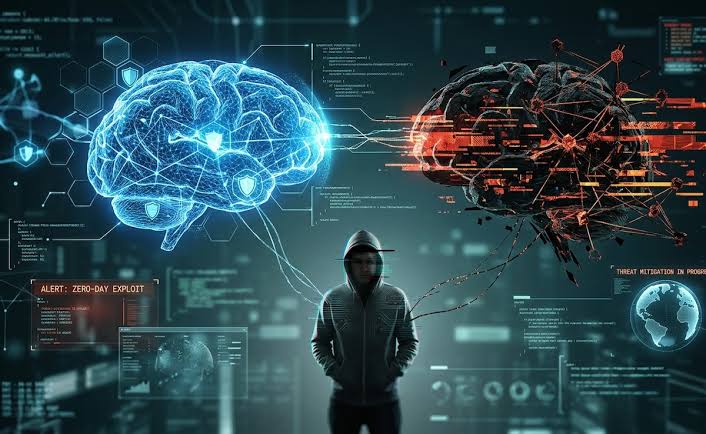
Artificial intelligence is changing how security teams identify threats, investigate incidents, and manage digital infrastructure.
Some of the most important applications include:
1. Automated Threat Detection
AI systems can analyze network traffic, system logs, and user behaviour to identify unusual patterns. This can help security teams investigate suspicious activities more efficiently.
2. Faster Security Analysis
Security teams often receive large numbers of alerts. AI can help organize information, identify relationships between events, and prioritize potentially serious incidents.
3. Vulnerability Identification
AI-assisted tools can help researchers and security professionals examine software, identify weaknesses, and evaluate possible security improvements.
4. Phishing Detection
AI can support the identification of suspicious messages, unusual email patterns, and potentially fraudulent websites.
5. Incident Response Assistance
AI-powered security tools may help analysts summarize incidents, collect relevant information, and recommend appropriate investigation steps.
6. Predictive Security Analysis
Machine learning systems can examine historical information and identify patterns that may indicate potential security problems.
However, AI-generated recommendations should be reviewed carefully, especially when they involve sensitive systems or business-critical decisions.
Major AI Cybersecurity Threats to Watch
Although artificial intelligence offers many security benefits, it can also increase certain cyber risks.
Understanding these threats is important for individuals, businesses, and government organizations.
| AI Cybersecurity Threat | How It Works | Possible Impact |
|---|---|---|
| AI-generated phishing | Creates convincing fraudulent messages | Stolen passwords and financial fraud |
| AI-assisted malware | Supports malicious software development or adaptation | Device and network compromise |
| Deepfake scams | Uses artificial media to imitate real people | Financial fraud and impersonation |
| Automated attacks | Helps attackers perform repetitive tasks faster | Increased attack scale |
| AI data poisoning | Manipulates training data or model inputs | Unreliable AI outputs |
| Prompt injection | Attempts to manipulate an AI system through malicious instructions | Unauthorized actions or data exposure |
| Model theft | Attempts to copy or extract valuable AI models | Intellectual property loss |
| AI agent misuse | Exploits excessive permissions or insecure tool access | Unauthorized system activity |
AI-Generated Phishing Attacks
Phishing remains one of the most common cybersecurity concerns. AI can help attackers create messages that are more personalized and grammatically convincing.
A fraudulent email may imitate a manager, bank, supplier, or customer support representative. Employees should verify unusual requests instead of trusting a message simply because it looks professional.
Deepfake and Voice Impersonation
Deepfake technology can create artificial images, videos, and audio that imitate real people.
Criminals may use voice impersonation to convince employees to transfer money, disclose confidential information, or change account details.
Organizations should establish verification procedures for financial transactions and sensitive instructions.
Prompt Injection Attacks
Prompt injection is a security risk involving malicious instructions designed to manipulate an AI system.
For example, an attacker may attempt to make an AI assistant ignore its intended instructions or reveal information it should not access.
Businesses using AI assistants should restrict permissions, separate trusted instructions from untrusted content, and test applications against manipulation attempts.
AI Cybersecurity Trends in 2026
Several developments are shaping the AI cybersecurity industry in 2026. These trends involve both the growing use of AI in security operations and the need to protect AI-powered applications.
AI-Powered Security Operations
Security teams are increasingly exploring AI tools that can assist with alert analysis, incident summaries, and repetitive investigation tasks.
Autonomous AI Agents
AI agents can interact with software, access information, and perform tasks. Organizations need to control their permissions and monitor their activities.
AI Security Testing
Businesses are paying greater attention to testing AI models and applications before deploying them. This includes checking for vulnerabilities, unsafe outputs, and unauthorized data access.
Cloud and AI Infrastructure Protection
As AI applications depend on cloud computing, organizations need strong identity management, secure storage, encryption, and network protection.
Zero Trust Security
Zero trust is a security approach based on verifying users and devices instead of automatically trusting them because they are inside an organization’s network.
Human Oversight
AI tools can support security professionals, but human review remains important for sensitive decisions, complex investigations, and incident management.
How Businesses Can Protect Themselves From AI Cyber Threats
Businesses should update their cybersecurity strategies as they adopt artificial intelligence.
AI-related threats can affect customer information, internal systems, cloud environments, and business operations. A practical security strategy should address both conventional cyber risks and threats involving AI applications.
Important measures include:
- Use multifactor authentication for important accounts.
- Keep operating systems and applications updated.
- Monitor network activity and unusual login behaviour.
- Restrict access to confidential business information.
- Review permissions given to AI applications and agents.
- Test AI systems before connecting them to sensitive tools.
- Maintain secure and regularly tested data backups.
- Train employees to recognize phishing and deepfake scams.
- Monitor third-party software and service providers.
- Prepare an incident response and recovery plan.
- Review security policies whenever new AI tools are introduced.
Businesses should also establish clear rules about which information employees can share with public AI platforms. Sensitive customer data, passwords, confidential documents, and proprietary information should not be entered into tools without appropriate authorization and security approval.
How Individuals Can Stay Safe From AI Cyberattacks
AI-related cybersecurity threats do not affect only large companies. Individuals can also encounter fraudulent messages, impersonation scams, suspicious websites, and account attacks.
A few basic precautions can reduce many everyday risks.
Use Strong and Unique Passwords
Create a different password for each important account. A password manager can help store and manage credentials securely.
Enable Multifactor Authentication
Multifactor authentication adds another verification step beyond a password. It can help protect accounts even when login credentials are compromised.
Verify Unusual Requests
If someone requests money, account access, or confidential information through an unexpected call or message, verify the request through a separate trusted communication channel.
Avoid Suspicious Links
Do not open unexpected attachments or enter login information on unfamiliar websites.
Keep Devices Updated
Install security updates for operating systems, browsers, mobile applications, and other important software.
Be Careful With AI-Generated Content
AI-generated images, videos, audio, and messages can appear convincing. Check important claims and verify the identity of people making sensitive requests.
Protect Personal Information
Avoid sharing unnecessary personal or financial details publicly or through untrusted online services.
The Future of AI and Cybersecurity
The relationship between artificial intelligence and cybersecurity will become increasingly important as organizations adopt more advanced technologies.
AI may help security professionals analyze threats, automate repetitive tasks, and identify vulnerabilities. At the same time, cybercriminals may continue using AI to improve social engineering, automate reconnaissance, and increase the scale of malicious activity.
Future cybersecurity strategies are likely to focus on several areas:
- Better protection for AI models and applications.
- Continuous monitoring of AI agents.
- Stronger identity and access management.
- Automated vulnerability detection.
- Improved threat intelligence.
- Secure cloud and connected-device environments.
- Responsible AI development.
- Stronger cooperation between governments and technology companies.
The most effective approach will combine AI-powered security tools with experienced professionals, clear policies, and regular security assessments.
Frequently Asked Questions About AI Cybersecurity News Today
1. What is the latest AI cybersecurity news today?
On November 3, 2026, a major development was the UK’s National Cyber Security Centre warning that AI-powered malware is highly likely to be used in a ransomware attack against critical national infrastructure by 2028. Taiwan also announced a task force to address AI-related cyber threats.
2. How is AI changing cybersecurity?
AI is helping cybersecurity professionals analyze security data, detect unusual behaviour, identify vulnerabilities, and support incident response. However, attackers can also use AI to improve phishing messages, automate malicious activities, and develop more convincing scams.
3. Can artificial intelligence be used for cyberattacks?
Yes. Cybercriminals may use AI to support phishing, social engineering, reconnaissance, and certain malware-related activities. AI can also make some attacks more scalable, although it does not automatically make every cyberattack successful.
4. What are the biggest AI cybersecurity threats in 2026?
Important threats include AI-generated phishing, deepfake impersonation, prompt injection, insecure AI agents, data poisoning, model theft, and AI-assisted malware. Organizations should evaluate these risks as part of their wider cybersecurity strategies.
5. How can businesses protect themselves from AI cybersecurity threats?
Businesses should use strong authentication, update software, monitor systems, restrict access to sensitive data, test AI applications, train employees, and maintain secure backups. They should also establish clear policies for using AI tools and responding to security incidents.
Conclusion
AI cybersecurity news today highlights how artificial intelligence is changing the digital security landscape. The UK’s warning about possible AI-powered attacks on critical infrastructure, Taiwan’s new AI cybersecurity task force, and growing industry investment in AI security demonstrate the importance of preparing for emerging threats.
Artificial intelligence can help security professionals identify vulnerabilities, analyze threats, and improve incident response. However, the same technology can also support phishing, impersonation, malware development, and other malicious activities.
For businesses and individuals, the best response is to combine modern security technology with strong passwords, multifactor authentication, regular updates, employee awareness, and responsible AI usage.
As AI continues to develop, cybersecurity will remain an essential part of protecting digital information, critical infrastructure, and online services.